
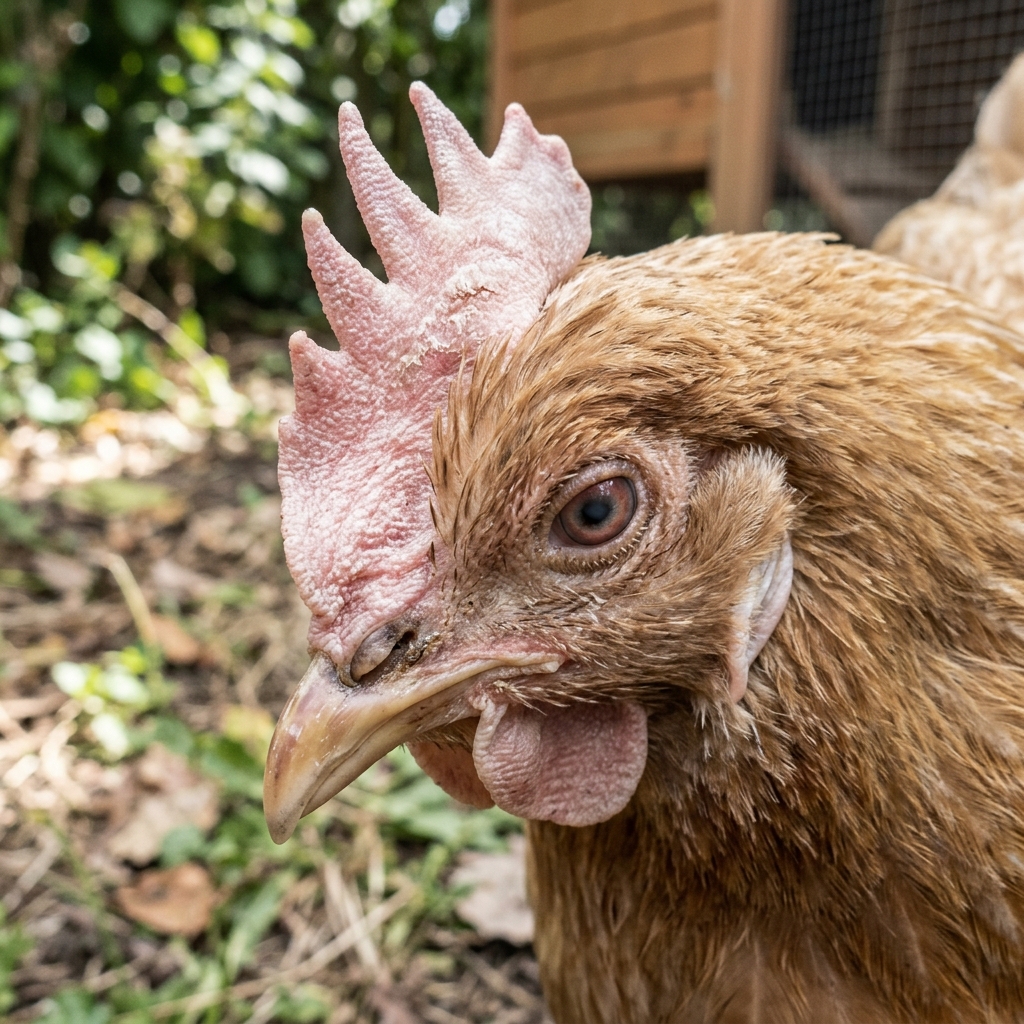
What are the clinical signs of fire ant attack?
| Stage of onset | Physical presentation | Behavioral indicators | Recommended keeper action |
|---|---|---|---|
| Early onset (Days 1 to 2) | Swelling, Localized lesions or necrosis | Subtle reduction in feed intake, slight lethargy, separation from flock | Move bird to hospital crate at 75°F to 80°F, assess crop and vent, measure baseline weight in oz |
| Progressive stage (Days 3 to 5) | Ants visible or mound nearby, Secondary clinical complication #4 | Huddling under warmth, ruffled plumage, reluctance to walk or forage | Administer avian electrolytes in water, collect fresh droppings for 24 hours |
| Advanced stage (Days 6+) | Secondary clinical complication #5, Secondary clinical complication #6 | Severe weakness, eyes closed, inability to stand, 15% body weight loss | Immediate veterinary intervention, thermal regulation, diagnostic testing |
How do you distinguish fire ant attack from similar flock diseases?
Poultry diseases frequently mimic one another in backyard flocks. When examining a sick chicken for Fire Ant Attack, evaluate these alternative conditions before reaching conclusions:
| Suspected condition | Distinguishing physical features | Clinical rule-out method |
|---|---|---|
| Flea Infestation | Presents with overlapping weakness, but displays distinct primary lesions or organ involvement | Avian veterinary physical exam, fecal flotation, or laboratory culture |
How should keepers stabilize a chicken with fire ant attack?
When you observe symptoms consistent with Fire Ant Attack, take these structured supportive steps to stabilize the bird while arranging clinical diagnostics:
- Isolate in safe hospital housing: Remove the chicken from the flock immediately. Place the bird in a clean, predator-proof hospital crate or plastic tote lined with fresh paper towels or dry puppy pads in a quiet, warm area maintained between 75°F and 80°F.
- Assess hydration and body condition: Offer fresh, clean water mixed with avian electrolytes and vitamins. Never force water or liquid down the beak, which causes aspiration pneumonia into the open tracheal glottis.
- Sanitize flock equipment and premises: Thoroughly clean and disinfect coop waterers, feeders, and roosting perches with avian-safe disinfectant. Remove damp bedding litter immediately.
- Collect baseline diagnostic data: Note the consistency of droppings, respiration rate, crop fullness, and comb coloration over 24 hours. Record changes in body weight daily to inform veterinary consultation.
- Schedule avian veterinary examination: If the bird displays progressive lethargy, respiratory rales, neurological signs, or severe dehydration, contact a licensed poultry veterinarian for prescription diagnostics.
What veterinary tests confirm fire ant attack in poultry?
Accurate identification requires professional veterinary diagnostics rather than keeper guesswork. Key clinical evaluation tests include:
- History: Evaluation performed by a licensed poultry clinician to verify pathogen identity.
- Clinical signs: Evaluation performed by a licensed poultry clinician to verify pathogen identity.
- Physical exam: Evaluation performed by a licensed poultry clinician to verify pathogen identity.
How do you prevent fire ant attack from spreading in the coop?
Long-term flock protection depends on sound husbandry and strict biosecurity practices:
- Remove any food sources such as broken eggs, uneaten feed, or trash from area: Essential flock management practice to reduce transmission risks.
- Sweetworm wood oil may be a natural alternative to reducing fire ant populations: Essential flock management practice to reduce transmission risks.
- Establish populations of phorid flies nearby: Essential flock management practice to reduce transmission risks.
- Certain species of beneficial nematodes, labeled as ANTidote, Gulf Coast Biotic Technology: Essential flock management practice to reduce transmission risks.
- Spinosad baits: Only the product Justice® can be used on individual mounds in pastures where animals are potentially exposed.: Essential flock management practice to reduce transmission risks.
Sources and clinical references
- Peer-Reviewed Avian Veterinary Study: Fire Ant Attack Clinical Analysis
- Peer-Reviewed Avian Veterinary Study: Fire Ant Attack Clinical Analysis
- Peer-Reviewed Avian Veterinary Study: Fire Ant Attack Clinical Analysis
- Penn State Extension: Poultry Health and Disease Management
- University of Georgia Extension: Avian Health and Biosecurity
- Cornell University College of Veterinary Medicine: Avian Diagnostics