
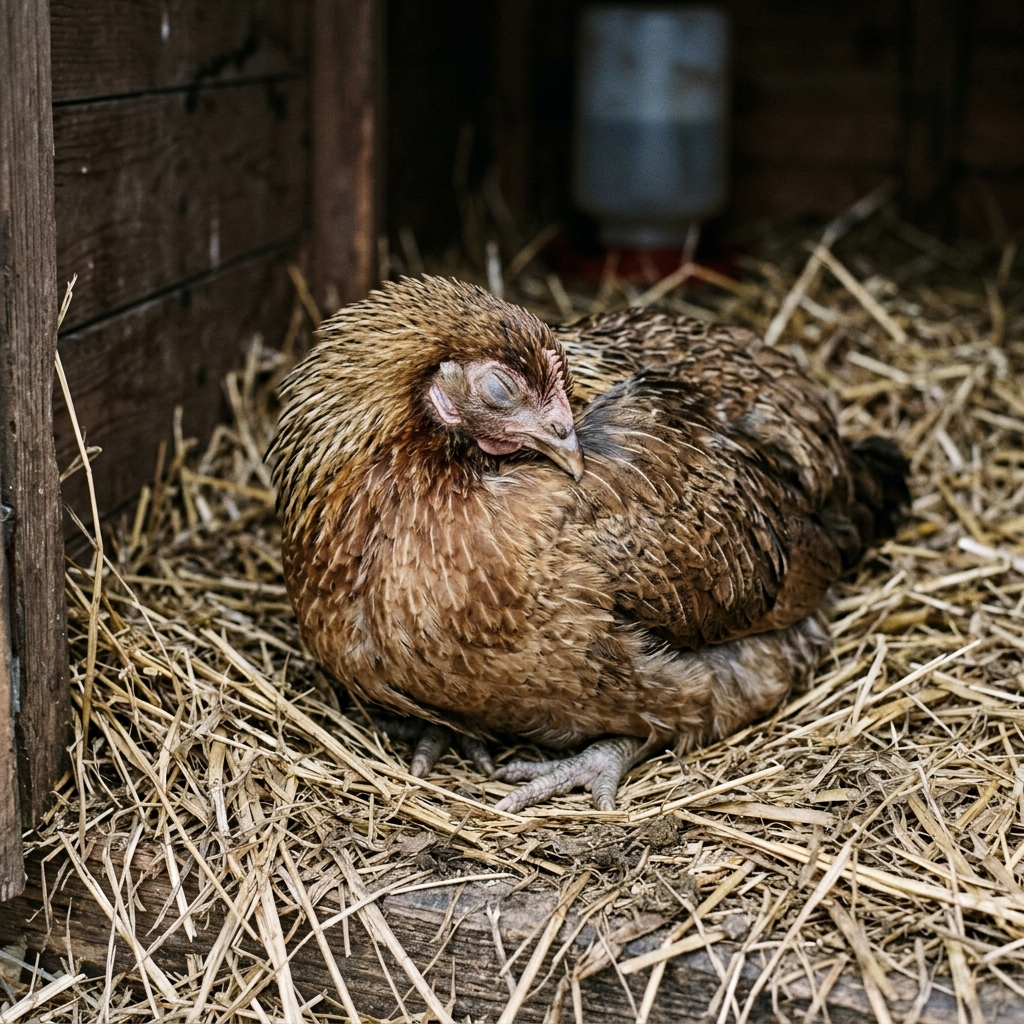
Description
Is wry neck contagious in chickens? Clear yes-or-no answer, when flockmates can share the same cause, isolation steps, and when to call a vet.
Is Wry Neck Contagious in Chickens? (And When the Flock Still Needs Checking)
Quick answer
No. Classic wry neck (torticollis, crookneck, stargazing) is not a contagious disease you catch from a flockmate. Most backyard cases come from vitamin E or thiamine shortfalls, head trauma (especially in crested breeds), or toxins. Those causes do not spread bird-to-bird like a cold.
A shared cause can still hit more than one bird. Bad feed, moldy scraps, or a contagious nervous-system disease (rare in well-managed backyard flocks, but real) can produce similar neck signs in several birds. Isolate the twisted bird so she is not trampled, fix the environment, and watch the rest of the flock.
Do today: Move her to a padded, quiet space. Offer hand-fed mash and water at the side of the beak. Check feed age and smell. Photograph comb, eyes, and posture. Run a 10-scan Flockline check if you want a structured baseline on her and any quiet flockmates.
Quick facts
| Question | Short answer |
| Is wry neck contagious? | No, as a nutritional or trauma syndrome |
| Can more than one bird get it? | Yes, if they share feed, toxins, or (rarely) a flock disease |
| First flock step | Isolate the affected bird; inspect feed and water |
| Urgent red flags | Seizures, inability to swallow, multi-bird sudden illness, bloody droppings with collapse |
| Related full protocol | Wry neck Vitamin E care guide |
What "contagious" actually means here
Keepers usually mean: Will my other hens catch this if they share the coop?
For the common pattern (crooked neck, walking backward, stargazing after stale feed or a head bump), the answer is no. Kalmbach Feeds' poultry nutrition overview states wry neck is not contagious bird-to-bird, while noting the same cause can affect multiple birds (Kalmbach Feeds). Freedom Ranger Hatchery and other hatchery education pages make the same point and stress separation to prevent trampling (Freedom Ranger Hatchery).
So you isolate for safety and nursing access, not because wry neck behaves like coryza.
Causes that are not contagious (but can look "spreadable")
1. Feed and vitamin shortfalls
Vitamin E protects nerve tissue. Selenium helps the bird use vitamin E. Stale feed (often open more than about six weeks), rancid fats, or a ration short on these nutrients can tip a bird into neurological signs. If the whole bag is off, several birds can show trouble within days of each other. That is a shared diet problem, not bird-to-bird contagion.
2. Crested skull anatomy and trauma
Silkies, Polish, and other crested breeds have vaulted skulls that make head knocks riskier. One bird's wry neck after a roost collision does not infect her sister. It does mean you should check roost height, overcrowding, and bullying.
3. Toxins and mold
Mycotoxins in moldy feed or certain plant toxins can damage the nervous system. Again, the hazard is the environment, not a germ jumping feathers.
Causes that can involve flock risk
Wry neck is a sign, not a single diagnosis. Less often, neck twisting appears with serious infectious disease:
- Newcastle disease and other reportable viral illnesses can cause neurological signs.
- Marek's disease can produce paralysis or atypical posture in unvaccinated birds.
If several birds go down fast, if you see respiratory signs with neck twisting, or if birds die suddenly with neurologic disease, treat it as a flock biosecurity event. Contact an avian veterinarian or your state poultry diagnostic lab. Do not assume "it's just vitamins" when the pattern is multi-bird and severe. Petco's vet Q&A archive has discussed how some viral differentials are highly contagious when the clinical picture is broader than isolated torticollis (Petco Vet Q&A).
Isolation checklist (do this even though it is not "catching")
- Separate now. Soft-sided carrier or small pen with towel rolls so she cannot thrash and injure her neck.
- Hand-feed and water. Side-of-beak spoon or syringe mash. Never force liquid straight down the throat (aspiration risk). Full vitamin E + selenium supportive steps live in the wry neck treatment guide.
- Audit the shared resources. Smell the feed. Dump anything musty. Clean waterers. Remove questionable kitchen scraps.
- Watch flockmates 48-72 hours. Appetite, balance, comb color, droppings. Quiet birds get a closer look first.
- Document. Date, photos, which birds, feed brand and open date. Bring that packet to a vet if she worsens.
Contagious vs not: decision table
| Pattern | Likely story | Contagion concern | Next move |
| One crested bird after a fall | Trauma | Low | Isolate, support, vet if she cannot swallow |
| Several birds, same stale feed bag | Nutrition / mycotoxin | Shared cause, not person-to-person style spread | Replace feed, support affected birds |
| Multi-bird neuro + respiratory or high death rate | Possible infectious disease | High | Vet / diagnostic lab immediately |
| One bird, improving on vitamin support | Classic deficiency torticollis | Low | Continue protocol; recheck flock feed |
Common mistakes
- Leaving a twisted bird in the main flock "because it's not contagious" and watching her get pecked.
- Treating vitamins only while ignoring multi-bird collapse.
- Forcing water down the center of the beak.
- Assuming every crooked neck is Marek's (or assuming none ever is).
FAQ
Is wry neck contagious to ducks or other poultry?
Nutritional and trauma wry neck does not spread as an infection. Shared toxins or a true flock viral disease can affect mixed poultry. When in doubt, separate species groups and call a vet.
Should I cull the rest of the flock if one bird has wry neck?
No, not for a single nutritional or trauma case. Cull decisions belong with a veterinarian when disease is confirmed or welfare is hopeless.
How fast do other birds show signs if the cause is feed?
Timing varies. Watch daily for a week after you change feed, especially chicks and crested breeds.
Can recovered birds return to the flock?
Yes, once they eat and drink independently, balance well, and are not being targeted. Reintroduce with the same care you use for any injured bird.
When to call a veterinarian
Call promptly if she cannot swallow, flips violently, has seizures, shows respiratory distress with neurologic signs, or if more than one bird is affected. Bring photos and feed notes.
Scan her, then decide with better data
A crooked neck is hard to judge from memory alone. One clear photo set of comb, eyes, posture, and droppings helps you track whether she is stabilizing. Flockline's 10-scan pack ($1.99, no subscription) gives you structured health checks and a care plan you can start the same day: Start 10 scans.
Sources
- Kalmbach Feeds: Wry neck causes and contagion notes
- Freedom Ranger Hatchery: Wry neck overview
- British Hen Welfare Trust: What is wry neck
- Flockline Learn: Wry neck Vitamin E protocol
Educational guide for backyard keepers. Not a substitute for hands-on veterinary diagnosis. Reviewed to match Flockline Learn editorial standards (Dr. Lucy Jenkins, DVM voice and safety framing).