
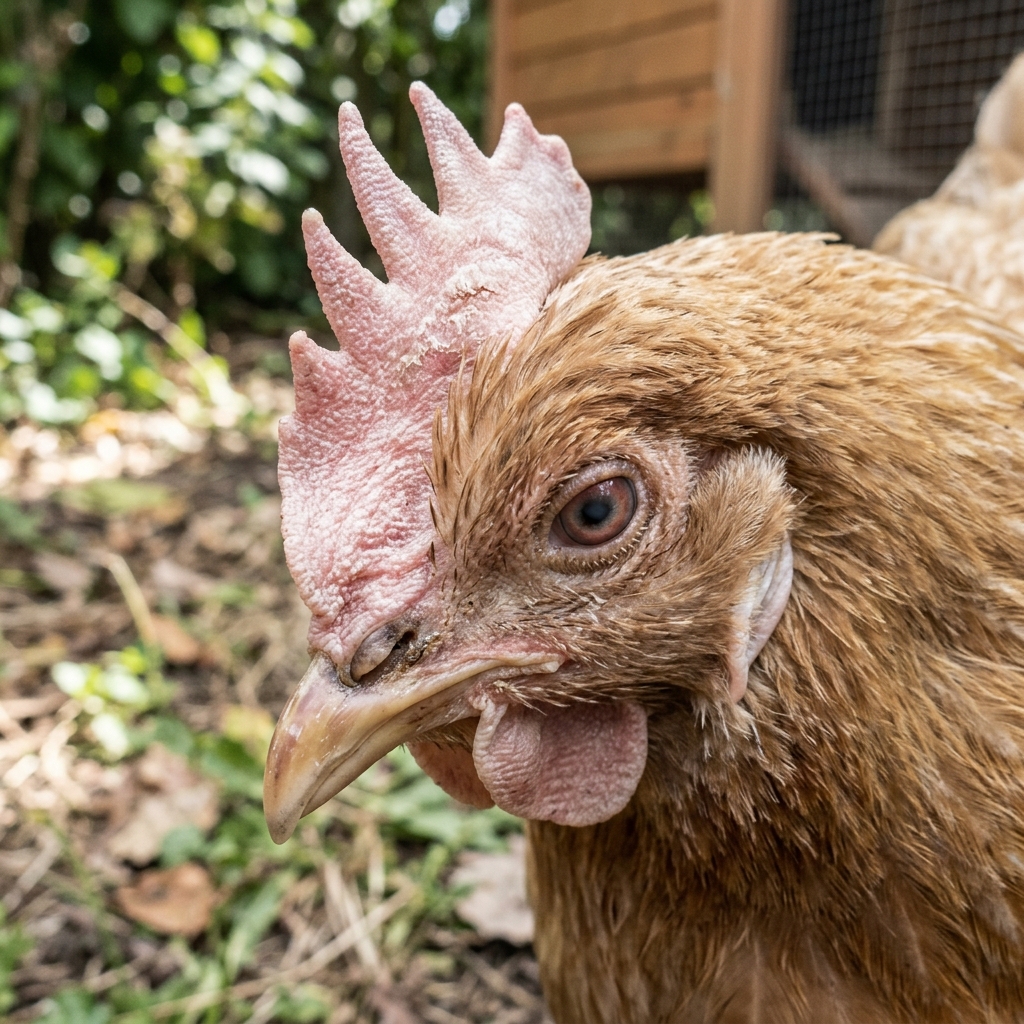
Description
Pale comb causes in chickens: molt and non-lay vs mites, anemia, heat, and emergency white combs, with a practical check order.
Pale Comb Causes in Chickens: What the Color Change Usually Means
Quick answer
A pale comb means less red blood color showing at the surface. Common causes range from normal out-of-lay or molt hormones, to heat, to blood loss from mites, to internal parasites or illness. Color alone does not name the disease.
Work the cause in order: confirm the color in daylight against her old photos, check heat and lay status, then hunt external parasites at the vent and roost cracks, then weigh whole-bird signs (energy, appetite, droppings, breathing).
Do today: Daylight photos. Vent feather check. Night roost mite check. Note if she is eating. Run a 10-scan Flockline check to log comb + whole-bird context.
Quick facts
| Comb look | Common contexts |
| Soft pink, bird bright | Molt, pause in lay, young pullet not yet in full production |
| Pale + panting, wings out | Heat stress |
| Paper-white + weak | Anemia emergency until proven otherwise |
| Pale + dirty vent feathers | External parasites high on the list |
| Baseline method | Same bird, same light, dated photo |
| Full triage page | Chicken pale comb symptom guide |
Cause group 1: Normal or seasonal (still verify)
Out of lay and molt
When estrogen falls, combs often shrink and lighten. Molting hens commonly look "off color" while they rebuild feathers. Appetite should stay reasonable; she should still walk and forage.
Immature pullets
Before regular lay, combs may stay smaller and pinker than veteran layers.
Still check parasites. Normal hormonal pallor is a diagnosis of context, not a free pass to skip the vent exam.
Cause group 2: Environment
Heat
In high heat, blood flow and stress change comb appearance. Look for panting, holding wings out, and lethargy in the hot hours. Cool water, shade, and airflow matter first. Pair with heat stress cooling guidance.
Cold injury (less "pale," more damaged)
Frostbite tends toward black tips and tissue injury more than simple pink pallor. See frostbite comb care.
Cause group 3: Blood loss and parasites (top backyard culprit)
Heavy northern fowl mites or red mites drink blood. Birds become anemic: pale comb, weakness, reduced lay, sometimes death in severe loads. Check:
- Vent and under wings for moving specks
- Nighttime roost cracks (red mites often leave birds by day)
- Flock-wide pattern if the coop is infested
Treat birds and housing. Start from lice vs mites triage and mites treatment guide.
Internal worms can contribute to poor condition and secondary pallor. Fecal testing beats guessing; see fecal flotation protocol.
Cause group 4: Systemic illness and emergencies
Pale comb with collapse, cold feet, labored breathing, or rapid decline is an emergency workup: trauma, reproductive catastrophe, severe infection, or profound anemia. Do not wait on forum cycles.
Other whole-bird problems (chronic disease, poor nutrition, reproductive disorders) can show a dull comb as one line in a longer symptom list. Use lethargic / not eating triage when energy drops.
Cause-sorting table
| If you also see… | Suspect first | Action |
| Feather push + decent energy | Molt / lay pause | Protein-adequate feed; monitor |
| Panting in 85°F+ heat | Heat | Shade, water, cool-down |
| Specks at vent, nighttime mites | External parasites | Treat flock + coop |
| Weight loss, odd stools | Internal parasites / GI | Fecal test; vet guidance |
| White comb + collapse | Emergency anemia / shock | Vet now |
| Several dead or dying fast | Flock disease event | Vet + local animal health channels |
How to judge color without fooling yourself
- Step into even daylight (not pure red sunset light).
- Compare to a photo of the same hen from a good week.
- Note surface damage separately from color.
- Add behavior: eating, walking, breathing, droppings.
Flockline's pale comb guide expands this comparison method: pale comb symptom page.
Common mistakes
- Diagnosing from a single phone photo in yellow coop light
- Treating only the sickest hen when mites are a coop problem
- Stacking random iron tonics while skipping parasite checks
- Ignoring a white comb because "she's just molting"
FAQ
Does a pale comb always mean anemia?
No. Anemia is one important cause. Molt and heat are others. Severe paper-white combs with weakness deserve urgent care.
Can laying itself pale a comb briefly?
Some keepers and clinicians note circulation shifts around lay. Persistent pallor still needs the full check order.
Should I use online comb color charts as diagnosis?
Use them only to describe color. Diagnosis needs the whole bird and, when serious, a veterinarian.
Turn "she looks pale" into a record
Comb color arguments fade. Dated scans do not. Flockline's 10-scan pack ($1.99) checks comb, eyes, posture, and more from photos and stores the history on her profile: Start 10 scans.
Sources and internal references
- Merck Veterinary Manual: poultry behavior and physiology portal
- Flockline Learn: Pale comb triage, Mites vs lice, Symptom checker tool
Educational guide aligned with Flockline Learn vet-reviewed symptom style. Not a substitute for in-person veterinary care.